
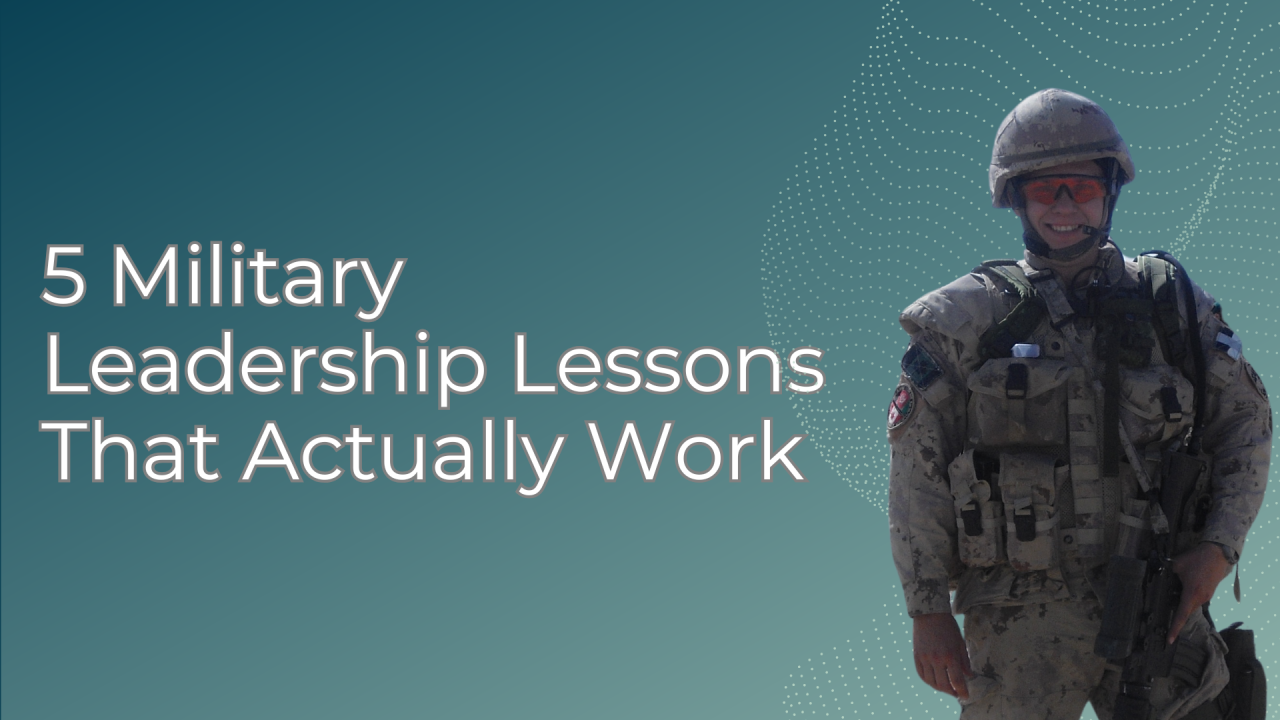
In today's rapidly evolving business environment, organizations face increasing pressure to adapt, innovate, and perform under challenging conditions. While business leaders often look to corporate success stories for inspiration, some of the most powerful leadership lessons come from an unexpected source—the armed forces.
Military leaders are trained to make critical decisions under pressure, manage diverse teams, execute complex missions, and maintain discipline in high-stakes environments. These same leadership principles can help businesses improve performance, strengthen teams, and navigate uncertainty.
Many of the world's most successful organizations have adopted leadership practices inspired by military strategy and culture. From accountability and teamwork to adaptability and mission-focused execution, the armed forces offer valuable lessons that can help businesses achieve operational excellence.
This article explores key leadership principles businesses can learn from the military and apply to modern organizational challenges.
Why Military Leadership Is Relevant in Business
Military operations often involve:
- Managing large teams
- Coordinating complex projects
- Operating under pressure
- Adapting to changing situations
- Achieving mission-critical objectives
Similarly, businesses must navigate competitive markets, workforce challenges, operational risks, and evolving customer expectations.
The ability to lead effectively under demanding circumstances is a shared requirement in both environments.
Mission-First Thinking
One of the most important military leadership principles is maintaining a clear focus on the mission. Every decision, action, and strategy is aligned with achieving the objective.
Organizations should establish clear goals and ensure every team member understands:
- Business objectives
- Project expectations
- Success metrics
- Individual responsibilities
Business Application
Organizations should establish clear goals and ensure every team member understands their role. When employees understand the mission, they are more likely to work collaboratively toward common goals.
Leading by Example
Military leaders are expected to demonstrate the behavior they expect from their teams. Respect is earned through actions rather than authority alone.
Effective business leaders:
- Demonstrate accountability
- Maintain professionalism
- Show commitment to organizational values
- Support team members during challenges
Business Application
Employees are more likely to follow leaders who consistently model the behaviors they promote.
Accountability Drives Performance
In the armed forces, accountability is a fundamental principle. Every individual understands their role and takes responsibility for their actions.
Organizations can improve performance by:
- Defining clear responsibilities
- Establishing measurable goals
- Conducting regular performance reviews
- Encouraging ownership of outcomes
Business Application
A culture of accountability reduces confusion and improves execution.
Adaptability in Changing Conditions
Military operations rarely go exactly as planned. Leaders are trained to adapt quickly when circumstances change.
Modern businesses face:
- Market disruptions
- Technological changes
- Economic uncertainty
- Shifting customer expectations
Business Application
Leaders who embrace adaptability can respond more effectively to challenges and opportunities. Flexibility has become a critical competitive advantage.
The Power of Teamwork
Military success depends on teamwork rather than individual performance. Strong teams are built on trust, communication, shared objectives, and mutual support.
Organizations should foster collaboration by:
- Encouraging cross-functional teamwork
- Promoting open communication
- Aligning departments around common goals
Business Application
High-performing teams consistently outperform isolated individuals.
Decision-Making Under Pressure
Military leaders often make decisions in complex and high-pressure situations where delays can have significant consequences.
Strong decision-making requires:
- Gathering relevant information
- Assessing risks
- Acting decisively
- Learning from outcomes
Business Application
Indecision can often be more damaging than making an imperfect decision. Strong decision-making requires a structured approach.
Discipline Creates Consistency
Discipline is one of the defining characteristics of military organizations. It ensures consistent performance, process adherence, and operational reliability.
Organizations can improve results through disciplined execution of:
- Standard operating procedures
- Performance standards
- Project management processes
- Workforce management practices
Business Application
Consistency often separates successful organizations from their competitors.
Continuous Training and Development
Military personnel undergo ongoing training throughout their careers. The objective is to continuously improve skills, readiness, and leadership capabilities.
Businesses should invest in:
- Employee development programs
- Leadership training
- Technical skill enhancement
- Continuous learning initiatives
Business Application
Organizations that prioritize learning are better prepared for future challenges.
Building Resilience During Challenges
Military leaders understand that setbacks are inevitable. Success depends on the ability to recover quickly and maintain focus.
Resilient organizations:
- Learn from failures
- Adapt to disruptions
- Maintain employee confidence
- Continue pursuing long-term objectives
Business Application
Resilience helps businesses navigate uncertainty while maintaining momentum.
Effective Communication Is Essential
Clear communication is critical in military operations. Miscommunication can result in confusion, delays, and operational failures.
Leaders should prioritize:
- Clear expectations
- Regular updates
- Active listening
- Transparent communication
Business Application
Strong communication improves alignment, productivity, and employee engagement.
Strategic Planning and Execution
Military operations are carefully planned, but success ultimately depends on execution.
Organizations should balance:
- Long-term strategic planning
- Short-term operational execution
Business Application
A well-designed strategy without execution delivers little value. Businesses that combine planning with disciplined action achieve better results.
Putting the Team Before the Individual
Military culture emphasizes collective success over personal recognition. Leaders focus on supporting their teams and creating environments where everyone can perform effectively.
Organizations can strengthen culture by:
- Recognizing team achievements
- Encouraging collaboration
- Supporting employee well-being
- Promoting shared success
Business Application
Employees who feel valued are more engaged and productive.
Why Businesses Are Increasingly Hiring Ex-Servicemen
Many organizations actively recruit ex-servicemen because they bring qualities that are highly valuable in business environments, including:
Veterans often excel in workforce management, project execution, field operations, and leadership roles.
Their ability to perform under pressure makes them valuable assets across industries.
Applying Military Leadership Principles to Modern Organizations
Businesses can integrate military-inspired leadership practices by:
- Establishing clear goals and expectations
- Promoting accountability
- Investing in employee development
- Encouraging adaptability
- Strengthening communication
- Building resilient teams
- Focusing on disciplined execution
These principles help create high-performing organizations capable of achieving sustainable success.
The Future of Leadership
As businesses face increasing complexity and uncertainty, leadership will become even more important. Future leaders must combine:
- Strategic thinking
- Technological awareness
- Emotional intelligence
- Operational discipline
- Adaptability
Military leadership principles provide a strong foundation for navigating these challenges and building successful organizations.
Conclusion
The armed forces have long been recognized for developing exceptional leaders capable of managing complex operations and achieving results under challenging conditions. The principles that drive military success—discipline, accountability, teamwork, adaptability, and mission-focused execution—are equally valuable in business.
Organizations that adopt these leadership practices can improve operational performance, strengthen workplace culture, and build teams that consistently deliver results.
In a competitive and constantly changing business landscape, leadership inspired by military excellence can provide a powerful advantage for long-term growth and success.